

Ads in ChatGPT and Google AI Mode: what UK businesses should do now
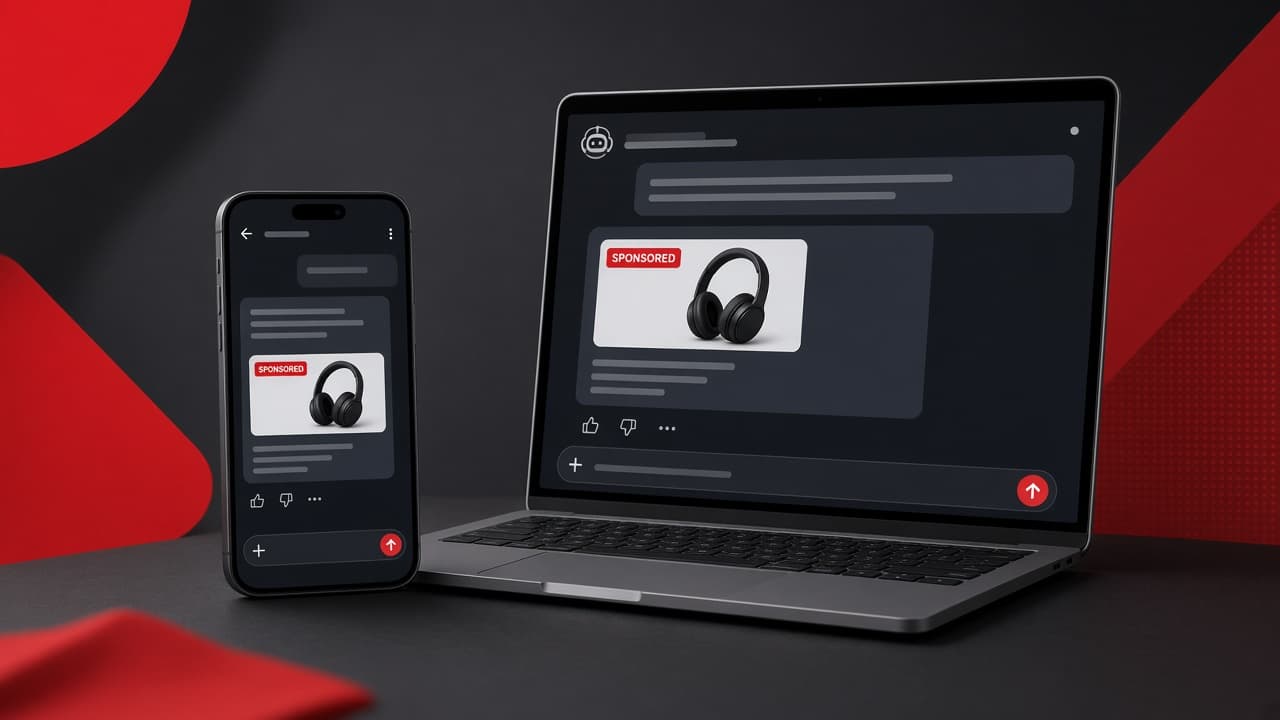
AI assistants are turning into ad space, and it's happening quickly. On 5 October OpenAI announced a new visual ad format for ChatGPT, plus a long list of measurement partners so advertisers can see what their ChatGPT ads actually do (OpenAI). At the same time, Google has been moving UK search campaigns onto its AI Max system and testing ordinary search ads inside AI Mode.
So the question for UK businesses isn't whether ads will appear in AI answers. They already do. The question is what you should do about it this quarter. Here's how we see it, and what we'd check first.
What OpenAI announced on 5 October
OpenAI says ChatGPT now reaches 1.2 billion people each week (OpenAI). Its latest update has three parts:
OpenAI also says ads don't influence the answers ChatGPT gives (OpenAI).
The visual format starts in the US, but UK businesses can already buy ChatGPT ads. OpenAI opened its self-serve Ads Manager beta to UK advertisers in June, making the UK the fifth market with access, and UK advertisers can buy on a cost per click basis as well as per thousand impressions (Digiday, Search Engine Land). Access is for advertisers in approved categories whose ads pass policy review.
What Google has changed in UK accounts
Google is moving the same way, but inside the accounts most businesses already run.
Between 1 and 30 September, Google automatically upgraded Search campaigns that used the campaign level broad match setting or automatically created assets to AI Max for Search (Search Engine Land, Google). Search term matching is switched on by default after the upgrade, and accounts that used automatically created assets also get text customisation switched on. That means your ads can show for searches you didn't pick, with wording you didn't write.
Then in early September, Google confirmed a "small experiment" letting exact and phrase match keywords serve text ads in AI Mode, its chat style search. Google's Ads Liaison Ginny Marvin said this only applies where there's "explicit and direct user intent", and that AI Max and Performance Max are built for the longer, conversational questions (Search Engine Roundtable, Search Engine Land). Google hasn't said which countries are in the test or how long it will run.
Put simply, Google is nudging advertisers towards automation so their ads are eligible for its AI answers.
Why this matters for UK businesses
Search is still the biggest part of UK advertising. The Advertising Association and WARC report UK ad spend rose 9.3% to £11.7bn in the first quarter of 2026 (AA/WARC), and the next quarterly update is due this month. When the biggest channel starts changing how ads are shown, it affects almost everyone.
We think three things change.
1. Fewer, longer, more specific questions. People don't type "accountant cambridge" into ChatGPT. They ask something like "which accountant near Cambridge is good with small limited companies?" The ad has to make sense next to an answer, not just next to a keyword.
2. Less control unless you check. AI Max and Performance Max decide more of the matching, wording and landing pages. That can work well. But if nobody's looking at the search terms and the ad text, you can end up paying for traffic that was never going to buy. Please be aware that automation learns from the data you give it, so poor conversion tracking leads to poor results.
3. Your brand has to be known before the question is asked. If an AI assistant lists three options and someone has seen your name on TV, on a bus stop or in a podcast, you're the one they click. Ads in AI answers reward the businesses people already recognise.
That last point is why we don't see this as just a search story. It's a reason to plan search, social, audio, TV and outdoor together, so the work you do to get known pays off when people start asking.
What we'd do now
You don't need to rebuild everything. Here's what we'd suggest for most UK businesses this quarter.
Check what Google switched on in September
Open Google Ads and look for campaigns now marked as AI Max. Check whether search term matching and text customisation are on, then look at the search terms report for the last few weeks. Add negative keywords for anything irrelevant and turn off features you don't want. Google lets you switch these off after the upgrade (Google). If you'd like a second pair of eyes, our Google Ads team and PPC management page explain how we review accounts.
Fix your conversion tracking first
Both Google and OpenAI are moving towards bidding on results, not clicks. That only works if they know what a result looks like. Make sure your forms, calls and sales are being tracked properly before you give any system more control. Our performance analytics work starts here.
Test ChatGPT Ads in a small, controlled way
If you sell something people research before they buy, it's worth a test. Pick one product or service, write ads that answer a real question, and send people to a page that answers it properly. Measure it against your search results, not on its own. Keep in mind the channel is new and the tools are still changing month to month.
Make your website answer real questions
Ads in AI answers sit next to the answer. Pages that explain clearly what you do, where you work and who you help give both people and AI systems something to go on. That's good for your ads and your organic search too.
Plan the whole mix, not one channel
Being known is what gets you chosen. Make sure your marketing strategy links search to the channels that build your name, like TV, audio and outdoor. Our omnichannel strategy and media buying in Cambridge and Manchester pages explain how we plan it.
How Clicks can help
We're a full advertising agency in Cambridge and Manchester, founded in 2016. We plan the strategy, make the ads and buy the media across TV, audio, outdoor, social and search, so the people who see you on one channel are ready when they ask about you on another.
We're keeping a close eye on ChatGPT Ads and Google's AI changes, and we'll keep checking what they mean for the accounts we run.
If you'd like us to take a look at your Google Ads after the September upgrade, or talk through whether a ChatGPT Ads test makes sense for you, message us. We reply within 24 hours.
FAQ
Can UK businesses advertise on ChatGPT?
Yes. OpenAI opened its self-serve Ads Manager beta to UK advertisers in June 2026, for approved categories whose ads pass policy review. UK advertisers can buy on a cost per click or cost per thousand impressions basis (Digiday).
Do ads change what ChatGPT says?
OpenAI says no. It states that ads are clearly labelled, kept separate, and don't influence the answers ChatGPT gives (OpenAI).
What is Google AI Max and has it changed my account?
AI Max for Search is Google's AI powered setting for Search campaigns. Between 1 and 30 September 2026, Google automatically upgraded campaigns that used the campaign level broad match setting or automatically created assets (Search Engine Land). If you used either, check your campaigns now.
Can my normal search ads show in Google AI Mode?
Google is testing it. Exact and phrase match keywords can serve text ads in AI Mode, but only for searches with explicit and direct intent, and Google calls it a small experiment (Search Engine Land).
Should I move money out of Google and into ChatGPT?
We wouldn't suggest it yet. Start with a small test, measure it against your existing search results, and keep building your brand across other channels so people recognise you when an AI answer lists your name.
Get marketing insights delivered to your inbox
Practical tips on Google Ads, paid social, and advertising strategy. No spam, just useful stuff.