
The Case for Advertising in Places People Cannot Skip
Something strange is happening in advertising. While the digital industry obsesses over click-through rates and programmatic efficiency, some of the oldest advertising formats are quietly delivering results that would make a performance marketer blush. Outdoor advertising revenue in the UK hit record levels in 2025. Podcast advertising continues to grow at double digits year on year. Radio, which the internet was supposed to kill two decades ago, reaches over 88 percent of UK adults every week. These are not legacy formats clinging to life. They are channels experiencing genuine resurgence, driven by a problem that digital advertising created for itself: people have learned to ignore it.
The Attention Crisis in Digital
The average person is exposed to somewhere between 4,000 and 10,000 ads per day, depending on whose research you trust. The exact number does not matter. What matters is that human beings have developed remarkably effective defence mechanisms against this bombardment. Banner blindness is so well-documented it is barely worth discussing. People's eyes physically skip over ad placements on websites. They have learned where ads sit on a page and they do not look there. Display click-through rates of 0.05 percent are considered normal. That means 99.95 percent of people exposed to your ad take no action whatsoever. Ad blockers are installed on roughly 30 percent of UK browsers. YouTube's premium tier, which removes ads, is one of the fastest-growing subscription products in the world. People are actively paying money to avoid advertising. Skip buttons have trained an entire generation to wait five seconds and then tap. The mental model is clear: advertising is an interruption to be minimised, not a message to be received. This is the environment in which brands are spending ever-increasing budgets on digital advertising. It works, to be clear, but it works despite the hostility of the environment, not because of it.
Why Physical Advertising Hits Different
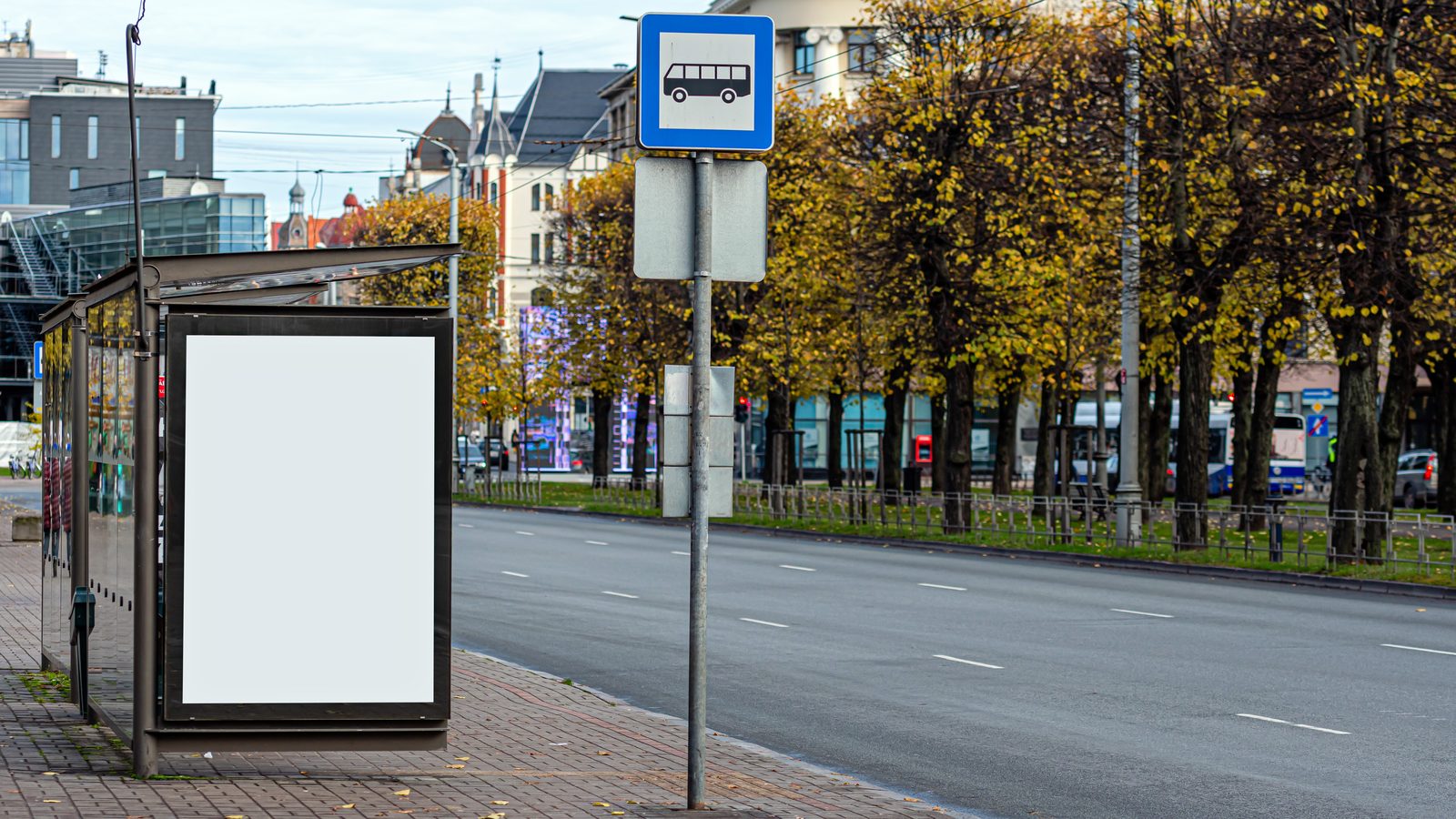
A billboard cannot be skipped. A bus shelter ad cannot be blocked. A poster in a train station does not have a five-second countdown. These formats exist in the physical world, where attention is governed by different rules. When you are standing on a platform waiting for a train, you look around. When you are driving and stopped at a traffic light, you notice what is in front of you. When you are walking through a city centre, your eyes take in the environment. Outdoor advertising is part of that environment. It does not interrupt your experience; it inhabits it. This is not nostalgia talking. The neuroscience backs it up. Studies consistently show that advertising encountered in physical spaces generates stronger memory encoding than identical messages delivered digitally. The physical context provides what researchers call 'environmental anchoring', where the brain associates the message with a specific place and moment, making it more retrievable later. Digital out-of-home (DOOH) has added a layer of sophistication that traditional billboards never had. Digital screens can rotate creative, target by time of day, respond to weather conditions, and serve different messages to different locations. You get the unskippable presence of outdoor advertising with the flexibility and targeting of digital.
Audio Advertising: The Intimacy Advantage
Podcast advertising works for a reason that most advertisers underestimate: intimacy. When someone listens to a podcast, the host's voice is literally inside their head, often through earphones, often during private moments like commuting, exercising, or cooking. A host-read podcast ad inherits the trust and relationship that the host has built with their audience. It is not an interruption from an unknown brand; it is a recommendation from someone the listener has chosen to spend time with. This is why podcast ad recall rates consistently outperform every other digital format. Research from the BBC and others shows podcast ads achieve recall rates of 70 percent or higher, compared to 30 to 40 percent for typical digital display. The targeting has matured significantly too. Programmatic podcast advertising allows you to target by genre, audience demographics, geography, and even listening behaviour. You do not need to sponsor a specific show and hope the audience matches. You can reach parents who listen to parenting podcasts, or business owners who listen to entrepreneurship content, or fitness enthusiasts who listen to health and wellness shows, regardless of which specific podcast they choose. Radio operates on similar principles but at much larger scale. Commercial radio reaches 36 million adults in the UK every week. The cost per thousand listeners is remarkably low compared to most digital channels, and the production costs for audio creative are a fraction of video. A well-produced radio ad can be created in days, not weeks. The combination of radio for reach and podcasts for targeted intimacy is one of the most underused strategies in UK advertising.
The Measurement Objection
The traditional objection to offline advertising is measurement. How do you know it is working? You cannot click a billboard. You cannot track a conversion from a radio ad with the same precision as a Google Ads click. This objection is legitimate but increasingly outdated. Modern measurement approaches have closed much of the gap. Brand lift studies measure changes in awareness, consideration, and purchase intent among exposed versus unexposed audiences. These are standard practice for larger campaigns and increasingly accessible for mid-market budgets. Search uplift analysis compares branded search volume during and after outdoor or audio campaigns against baseline periods. If branded searches for your company spike by 40 percent during a radio campaign and return to baseline when it stops, you have a clear signal of cause and effect. QR codes and vanity URLs on outdoor creative provide direct response tracking. A billboard with a unique URL or code gives you hard data on who engaged. Econometric modelling, for businesses with sufficient data, can isolate the contribution of each channel to overall revenue with reasonable precision. It is not click-level tracking, but it gives strategic clarity about what is actually driving growth. The measurement is different from digital, not worse. And there is an argument that the obsessive click-level tracking of digital advertising has created its own problems, encouraging short-term optimisation at the expense of long-term brand building.
The Media Mix Effect
Perhaps the strongest argument for offline channels is not their standalone performance but their effect on everything else. Multiple studies, including landmark research from the IPA (Institute of Practitioners in Advertising), show that campaigns using three or more channels significantly outperform single-channel campaigns. The effect is not additive; it is multiplicative. Outdoor advertising increases the effectiveness of your search campaigns. Radio increases the effectiveness of your social campaigns. The channels reinforce each other in ways that compound over time. The mechanism is straightforward. Someone hears your radio ad during their commute. They do not act immediately. Later that day, they see your outdoor ad near their office. Still no action. That evening, they see your social media ad. Now they recognise you. You are not an unknown brand interrupting their feed; you are a name they have encountered three times today. The click-through rate on that social ad is dramatically higher than it would be without the radio and outdoor priming. This is why the most sophisticated advertisers do not think in terms of individual channel performance. They think in terms of media mix, where each channel plays a role in a larger system.
Who Should Be Thinking About This
Offline advertising is not for everyone. Minimum viable budgets for outdoor campaigns typically start at £5,000 to £10,000 for a meaningful local presence. National radio requires significant investment to achieve the frequency needed for recall. Podcast advertising can start smaller, with some programmatic platforms allowing campaigns from £1,000, but impact requires consistency over time. Businesses with a local or regional focus are particularly well-suited to offline channels. A billboard campaign in Cambridge or Manchester, combined with local radio, can dominate a market in a way that digital alone cannot replicate. The physical presence signals permanence and credibility that a Google ad does not. E-commerce brands with proven digital performance that have hit a plateau should consider offline channels to expand their addressable audience. If you have optimised your digital campaigns to the point of diminishing returns, the next increment of growth often comes from reaching people who are not actively searching for your product. Any brand investing heavily in digital but seeing rising costs and declining returns should question whether the answer is spending more on the same channels, or diversifying into formats where attention is less contested.
The Bigger Point
The advertising industry has spent two decades telling itself that digital is the only channel that matters because it is the only channel you can measure precisely. That narrative was always a simplification. It is now becoming actively misleading. The best advertising has always been about reaching the right people, with the right message, in the right context. Sometimes that context is a search results page. Sometimes it is a podcast during a morning run. Sometimes it is a beautifully lit billboard on the side of a building. The medium is not the strategy. The audience is.
Get marketing insights delivered to your inbox
Practical tips on Google Ads, SEO, and digital marketing. No spam, just useful stuff.